
Key Facts
| Fact | Detail |
|---|---|
| What a denturist is | A licensed oral health professional who specializes in removable dentures: full dentures, partial dentures and implant-supported overdentures. |
| Scope of practice | Examines, plans, takes impressions, designs, constructs, fits, adjusts, repairs and relines dentures. Denturists do not extract teeth or do fillings. |
| Training | A two to three year college diploma in denturism, plus provincial qualifying exams and registration with the provincial regulator. |
| Regulation | Denturists are licensed in every Canadian province and territory. Only registered members may use the title. |
| Salary | Roughly $54,000 to $122,000 a year depending on experience, province and self-employment. Many denturists own their clinics. |
| Seeing one | No referral or dentist prescription is needed. Denturists see patients directly and often charge less than dentists for denture care. |
Most Canadians who need dentures start at a dental office. But there is a second, specialized route: the denturist. A denturist is a licensed oral health professional whose entire practice centres on removable dentures, from the first impression to the final fitting and the years of adjustments that follow.
Denturists are regulated in every province and territory, and you can see one directly without a referral. This guide covers what a denturist does, how the scope differs from a dentist, when to see one, how to become one, what denturists earn, and what denture care typically costs. For the wider picture, see dental professions in Canada.
In This Guide
- What Is a Denturist?
- What Does a Denturist Do?
- Denturist vs Dentist: What's the Difference?
- When Should You See a Denturist?
- How to Become a Denturist in Canada
- Denturist Regulation Across Canada
- Denturist Salary in Canada
- Denture Costs When You See a Denturist
- How to Find a Licensed Denturist
- Frequently Asked Questions
What Is a Denturist?
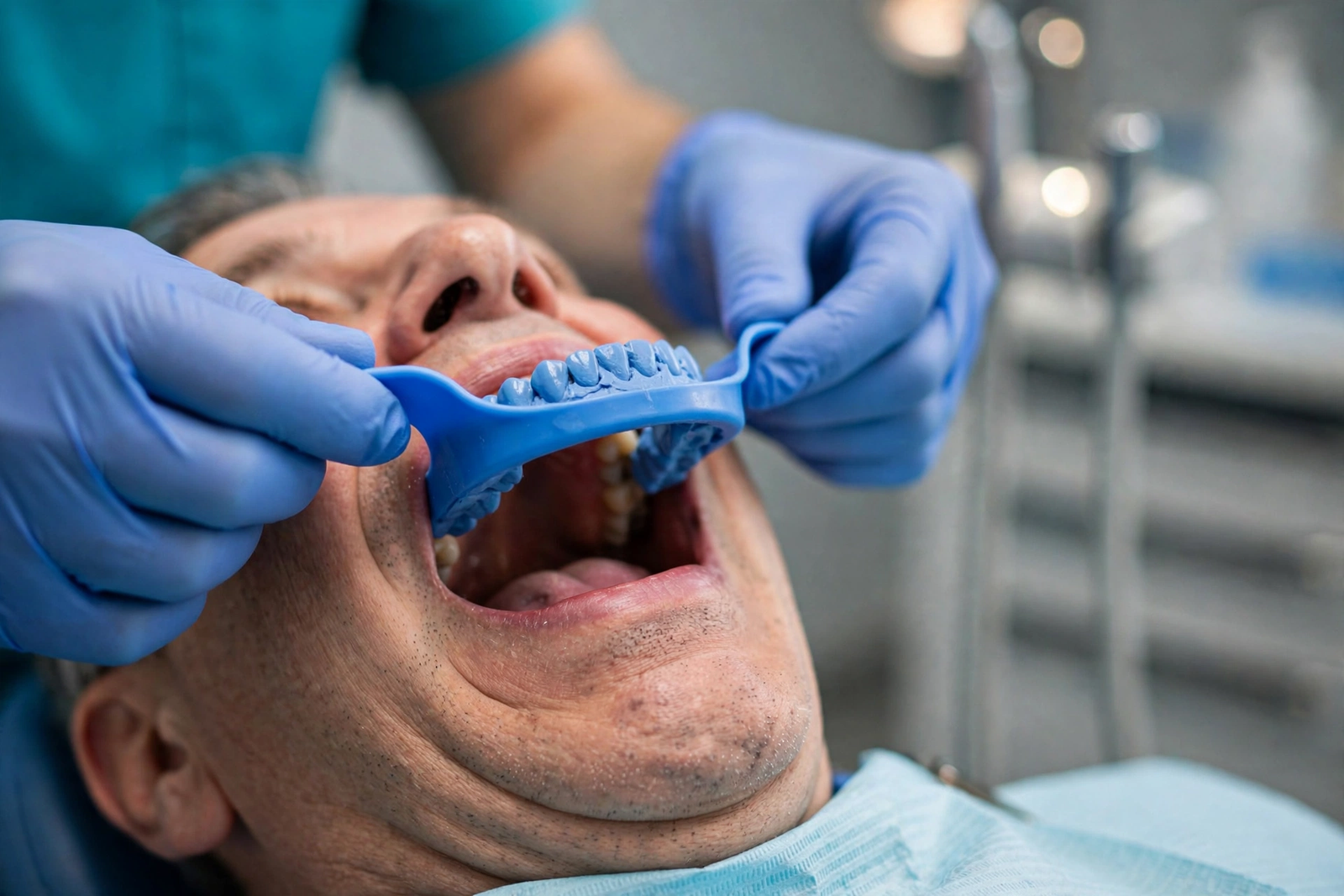
A denturist is an oral health care professional who specializes in removable dental prostheses, mainly dentures. Denturists examine a patient's oral health as it relates to tooth replacement, plan treatment, take impressions of the gums and jaws, design and construct the denture, deliver it, and fit, adjust and repair it over time. They work directly with patients, so you book an appointment with a denturist the same way you would with a dentist.
Statistics Canada lists denturists under occupation group NOC 3221, and most work in private practice. Elsewhere the same profession is called a dental prosthetist (Australia) or clinical dental technologist (the United Kingdom), and in Quebec the French term is denturologiste. The principle is the same: one specialist focused entirely on removable tooth replacement.
What Does a Denturist Do?
Day to day, a denturist's work covers the full denture journey. Their duties include:
- Measure patients' jaws to determine the size and shape of dentures required.
- Take impressions of the teeth, gums and jaws to design and construct full or partial dentures.
- Insert, fit and modify new dentures so they sit comfortably and function well.
- Repair dentures, and reline, rebase and adjust them as the mouth changes over time.
- Fabricate implant-supported removable prostheses, mouthguards and anti-snoring devices.
- May order radiographs and perform denture whitening and cleaning.
Because denturism is their only field, denturists are highly experienced with fit problems general practices see less often, such as sore spots, slipping dentures and bite issues.
Denturist vs Dentist: What's the Difference?
They often work in the same clinics and refer patients to each other, but their training and scope are very different:
| Denturist | Dentist | |
|---|---|---|
| Education | 2 to 3 year college diploma in denturism | 4 to 5 year university dental degree |
| Licensing | Provincial college of denturists | Provincial college of dental surgeons (NDEB) |
| Scope | Removable dentures and related appliances only | Full scope: diagnosis, surgery, fillings, crowns, braces |
| Extractions | Cannot extract teeth | Can extract teeth and perform surgery |
A dentist treats teeth and the whole mouth. A denturist replaces missing teeth with removable prostheses and maintains them. A denturist who spots a problem outside their scope, such as teeth needing extraction, refers the patient to a dentist, and dentists often refer denture work to denturists. For the dentist career path, see dentist salary in Canada and NDEB Canada.
When Should You See a Denturist?
See a denturist when the issue is missing teeth or a denture itself, rather than natural teeth or gums:
- You have lost some or all of your teeth and need new full or partial dentures.
- Your existing denture is loose, slips when you talk or eat, or causes sore spots.
- Your denture is cracked, chipped, worn or broken and needs repair or relining.
- You want a spare or second set of dentures.
- You need a sports mouthguard or an anti-snoring appliance.
No referral is needed. If your mouth needs treatment first, such as extractions or gum care, the denturist will refer you to a dentist.
How to Become a Denturist in Canada
The path is shorter than the one to dentistry, but denturism is a regulated health profession with formal exams and licensing. The typical steps are:
1. Finish high school with the prerequisites. Programs generally require biology, English and math, and many screen for manual dexterity and spatial reasoning.
2. Complete a denturism diploma program. These run two to three years and combine classroom study, laboratory work and supervised clinical practice. Notable options include George Brown Polytechnic's three-year Denturism advanced diploma in Toronto, recognized by the College of Denturists of Ontario, and the denturist technology diploma at NAIT in Edmonton. Quebec offers French-language denturology programs through its college system.
3. Pass the provincial qualifying examination. Graduation alone does not license you. In Ontario, graduates must pass the College of Denturists of Ontario qualifying examination, and other provinces run their own exams. Some programs include a clinical internship.
4. Register with the provincial regulator. Once you pass the exams and meet the remaining requirements, you register as a denturist in your province. Only then may you practise independently and use the protected title.
Denturism offers independent practice without a university degree. For contrast, see our guides to dental hygienists and dental assistants.

Denturist Regulation Across Canada
Denturism is regulated in every province and territory, so licensing rules vary by jurisdiction. The regulator sets the education and exam requirements, handles registration and renewals, and investigates complaints. The national professional body is the Denturist Association of Canada.
| Province or territory | Regulator |
|---|---|
| Ontario | College of Denturists of Ontario |
| Alberta | College of Alberta Denturists |
| British Columbia | College of Denturists of British Columbia |
| Saskatchewan | Denturist Society of Saskatchewan |
| Manitoba | Denturist Board of Manitoba |
| Quebec | Ordre des denturologistes du Quebec |
| New Brunswick | New Brunswick Denturists Society |
| Nova Scotia | Denturists Licensing Board of Nova Scotia |
| Newfoundland and Labrador | Newfoundland and Labrador Denturists Board |
| Prince Edward Island | Denturist Society of Prince Edward Island |
| Yukon, Northwest Territories, Nunavut | Territorial licensing or health departments |
The title is protected: only a registered member may call themselves a denturist. Before booking, you can check your provincial regulator's public register to confirm a denturist is licensed and in good standing.
Denturist Salary in Canada
Denturist earnings vary widely because many denturists are self-employed. Labour market data puts the typical range at roughly $54,000 to $122,000 a year. Reported averages cluster around $60,000 to $68,000 for employed denturists, while experienced clinic owners earn at the top of the range.
Earnings rise with experience and an established patient base, vary by location, and are highest for clinic owners, since running your own denture clinic means the business profits are yours. For the wider dental pay scale, compare with dentist salary in Canada.
Denture Costs When You See a Denturist
Getting dentures through a denturist is often the most direct and affordable route, since denture fabrication is the denturist's entire practice. Typical Canadian prices: complete dentures from about $1,000 to $3,000 per arch, partial dentures from about $700 to $2,000, and implant-supported dentures from about $5,000 to $15,000 or more. Relines, rebases and repairs generally cost far less, roughly $40 to $530.
For the full picture of options and price factors, read our guides to dentures and denture costs in Canada. Eligible Canadians should also know the Canadian Dental Care Plan covers full and partial dentures, plus repairs and relines. Private dental insurance plans frequently include partial denture coverage too.
How to Find a Licensed Denturist
Search your provincial regulator's online register for denturists practising near you, and confirm the one you are considering is registered and in good standing.
At the first appointment, ask about experience with your type of case, the fee schedule and what it includes, how many follow-up adjustments are covered, and the policy on remakes if the fit is not right. Get the treatment plan and costs in writing before you commit.
Frequently Asked Questions
What exactly is a denturist?
A licensed oral health professional who specializes in removable dentures: they examine patients, take impressions, design and build full or partial dentures, and handle fitting, adjustments, repairs and relines.
Is a denturist the same as a dentist?
No. A dentist holds a university dental degree and treats the whole mouth, including fillings, extractions and surgery. A denturist holds a college diploma in denturism and focuses solely on removable dentures.
Can a denturist pull teeth or do fillings?
No. Denturists cannot extract teeth, do fillings or perform surgery. If you need that treatment first, they will refer you to a dentist.
Do I need a referral to see a denturist?
No. Denturists see patients directly, so you can book an appointment yourself without a referral or prescription.
How long does it take to become a denturist in Canada?
Usually two to three years of college-level denturism study, then provincial qualifying exams and registration. George Brown Polytechnic's program is a three-year advanced diploma.
Are denturists licensed and regulated in Canada?
Yes. Denturists are regulated in every province and territory, and the title is protected. Check your provincial regulator's public register to confirm a denturist's licence.
How much do denturists earn in Canada?
Labour market data suggests a range of roughly $54,000 to $122,000 a year. Averages for employed denturists sit near $60,000 to $68,000, while experienced clinic owners earn more.
Are dentures from a denturist cheaper than from a dentist?
Often yes. Denturists specialize entirely in dentures, so their clinics typically charge less than general dental offices. Complete dentures generally run about $1,000 to $3,000 per arch.
Does the CDCP cover dentures made by a denturist?
The Canadian Dental Care Plan covers full and partial dentures, plus repairs and relines, for eligible Canadians. Confirm the denture provider bills the CDCP before treatment starts.
Sources
- Denturists, NOC 3221, Statistics Canada
- Denturism Program S101, George Brown Polytechnic
- How to become a denturist in Canada, Windmill Microlending
- Denturist certifications in Alberta, ALIS
- Denturists in Canada: regulatory bodies, Health HR Canada
- Denturist salary in Canada, PayScale
- Denturist salary in Canada, Talent.com
- The cost of dentures in Canada, Smile Directory
- Denturist, Wikipedia
Related Guides
- Dental Professions in Canada
- Dentist Salary in Canada
- Dental Hygienist in Canada
- NDEB Canada
- Dental Assistant in Canada
- Dentures
- Denture Costs in Canada
- Canadian Dental Care Plan (CDCP)