
Key Facts
| Fact | Detail |
|---|---|
| What it is | Removing a tooth from its socket in the jawbone. Two types exist: simple extraction and surgical extraction. |
| When it is needed | Severe decay, advanced gum disease, a fractured tooth, impaction, crowding before orthodontics, or infection a root canal cannot fix. |
| Typical cost in Canada | Simple: about $150 to $300 per tooth. Surgical: about $250 to $600 or more. Market ranges, not quotes. |
| Recovery | Simple: 1 to 3 days. Surgical: 1 to 2 weeks. Bone fills the socket over several months. |
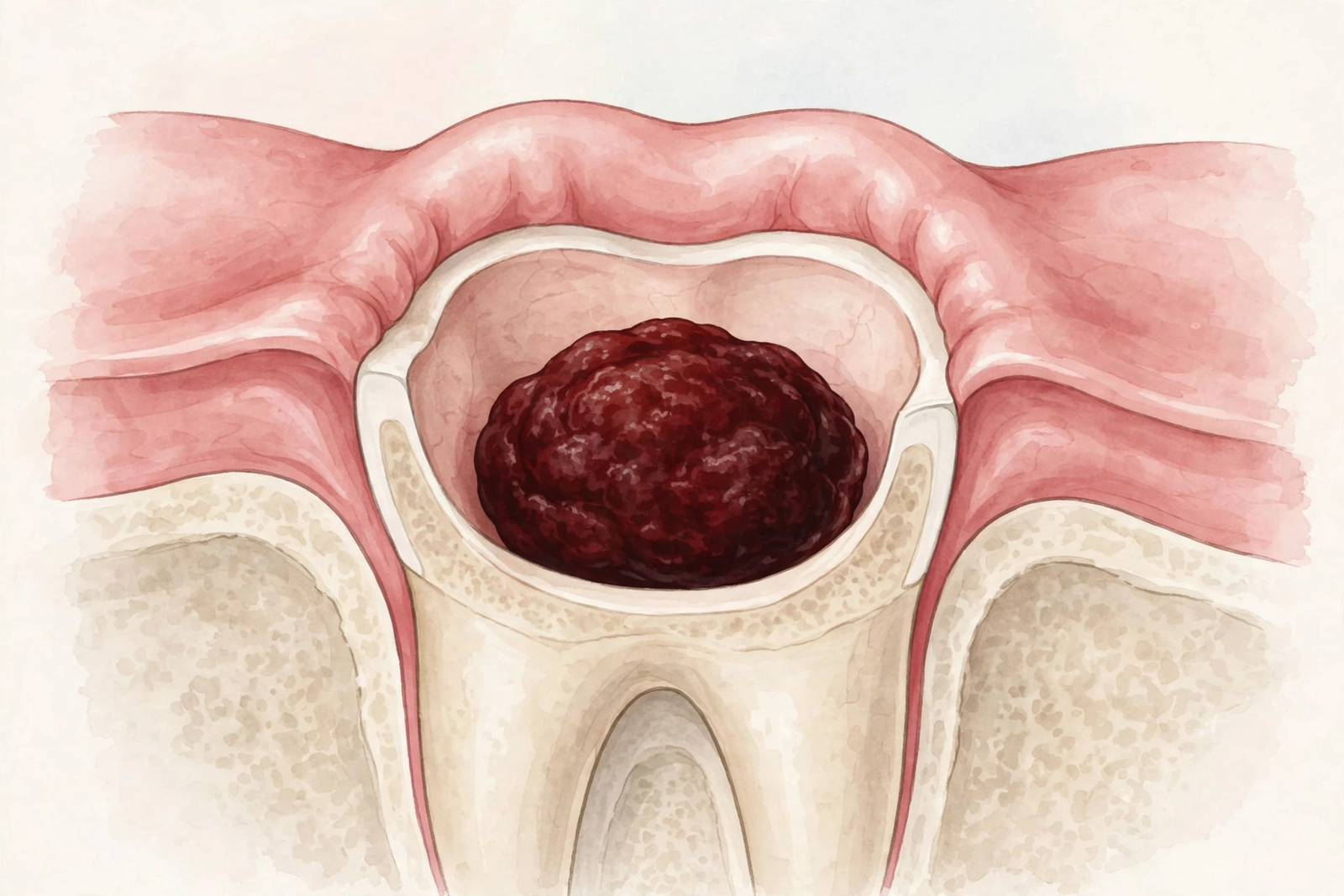
| Main risk | Dry socket: the blood clot comes loose, exposing bone and causing sharp pain days later. Preventable by protecting the clot. |
| Coverage | Most private plans cover extractions as a basic service, and the CDCP covers them for eligible patients. |
Tooth extraction is the removal of a tooth from its socket in the jawbone, recommended when a tooth cannot be saved with a filling, crown or root canal. Most extractions take under an hour, you are fully numbed, and recovery is usually straightforward.
This guide covers the full picture: the two types of extraction, what happens step by step, anesthesia options, costs in Canada, the day-by-day healing stages, how to avoid dry socket, and how insurance and the CDCP cover the procedure.
In This Guide
- Simple vs Surgical Extraction
- When Is a Tooth Extraction Needed?
- The Extraction Procedure, Step by Step
- Anesthesia and Pain Control Options
- Tooth Extraction Cost in Canada
- Recovery: Day-by-Day Healing Timeline
- Dry Socket: Signs, Prevention and Treatment
- Aftercare Rules: Protect the Blood Clot
- Wisdom Teeth: A Special Case
- What Replaces the Missing Tooth?
- Extraction vs Root Canal: Which Is Right?
- Frequently Asked Questions
Simple vs Surgical Extraction
Every extraction falls into one of two categories, and the difference explains most of the variation in cost, time and recovery.
A simple extraction is for a tooth fully visible above the gum line. The dentist numbs the area, loosens the tooth with an elevator, and lifts it out with forceps: about 20 minutes.
A surgical extraction is needed when the tooth is impacted, broken off at the gum line, or has curved or brittle roots. The gum is opened with a small cut, a little bone may be removed, and the tooth may be cut into sections before the socket is cleaned and stitched: 30 to 60 minutes.
| Simple extraction | Surgical extraction | |
|---|---|---|
| Which teeth | Fully erupted, visible | Impacted, broken, or below the gum line |
| Technique | Elevator and forceps | Gum incision, sometimes bone removal, tooth sectioned |
| Anesthesia | Local freezing | Local freezing, with or without sedation |
| Time in chair | About 20 minutes | About 30 to 60 minutes |
| Typical cost | About $150 to $300 | About $250 to $600 or more |
| Healing | 1 to 3 days | Up to 2 weeks |
The type is decided by the tooth. A tooth that looks fine above the gum can still need a surgical approach if its roots are curved or fragile, which the X-ray shows beforehand.
When Is a Tooth Extraction Needed?
Dentists recommend extraction only when the tooth cannot be saved predictably:
- Severe tooth decay: too little structure left for a filling or crown to hold.
- Advanced gum disease: the supporting bone and tissue are lost and the tooth is loose.
- Fracture below the gum line: a crack or break that cannot be restored.
- Impaction: a tooth (often a wisdom tooth) stuck under the gum or growing into a neighbour.
- Crowding: a tooth removed to make room before braces or Invisalign.
- Infection or abscess: an infection that root canal treatment cannot resolve.
- Baby teeth that will not fall out: blocking the permanent tooth underneath.
Timing matters: a badly infected tooth left in place can spread infection to the jaw and sinuses, and a crumbling tooth can damage its neighbours.
The Extraction Procedure, Step by Step
Here is the standard sequence, so you know exactly what happens in the chair:
Step 1: Exam and X-ray. The dentist checks the roots, surrounding bone and nearby nerves. This decides simple vs surgical and the right anesthesia.
Step 2: Freezing. Local anesthetic numbs the tooth, gum and bone. You will feel pressure and movement, but no sharp pain. Sedation, if chosen, takes effect before this step.
Step 3: Loosening and removal. Simple: the dentist rocks the tooth with an elevator and lifts it out with forceps. Surgical: the gum is opened, a little bone may be removed, and the tooth may come out in sections.
Step 4: Cleaning the socket. Debris and infected tissue are cleared to lower infection risk.
Step 5: Closing up. Surgical sites usually get stitches that dissolve or are removed in about a week; simple sites often need none.
Step 6: Gauze and instructions. You bite on gauze for 30 to 45 minutes to help the blood clot form, then get your aftercare instructions before you leave.
Anesthesia and Pain Control Options
Every extraction includes freezing; most patients find that enough. From lightest to deepest:
- Local anesthetic: an injection numbing the tooth and surrounding area. You stay fully awake. Standard for simple extractions.
- Nitrous oxide (laughing gas): through a mask, it eases anxiety and wears off within minutes. Typical range: about $75 to $150.
- Oral sedation: a tablet before the appointment leaves you deeply relaxed; you need a driver. Typical range: about $150 to $300.
- IV sedation: medication through a vein for deeper, longer calm; common for surgical cases. Typical range: about $230 to $870 depending on time and method.
- General anesthesia: full unconsciousness in a hospital or specialist setting for complex cases; under the CDCP it needs preauthorization.
Sedation is billed separately, so ask for both lines on your written estimate. You will feel pressure but should not feel sharp pain; if you do, the dentist can add more freezing.
Tooth Extraction Cost in Canada
Extraction fees are not fixed nationally. Dentists follow provincial fee guides (such as the ODA guide in Ontario), but each clinic sets its own fees. Treat everything below as a typical market range, not a quote:
- Simple extraction: roughly $150 to $300 per tooth.
- Surgical extraction: roughly $250 to $600 or more per tooth, occasionally reaching $900 for complex cases.
- Sedation: added separately, from about $75 for nitrous oxide to several hundred dollars for IV sedation.
- X-rays and exam: usually billed separately.
What moves the price: the tooth's position and condition (molars, broken or impacted teeth cost more), specialist vs general dentist, emergency vs scheduled appointments, and the city. Most private plans cover extractions as a basic service, often at 70 to 80 percent, so ask for a predetermination (a written estimate sent to your insurer) first. The CDCP also covers simple and surgical extractions for eligible patients within its fee guide. University dental schools run supervised student clinics at significantly lower rates.
Recovery: Day-by-Day Healing Timeline
Healing follows a predictable pattern:
Day 1: Bleeding is controlled with gauze (30 to 45 minutes); some oozing for 12 to 24 hours is normal. The protective blood clot forms. Once numbness wears off, soreness sets in. Rest, apply ice in 10-minute intervals, and eat cool soft foods.
Day 2: Swelling usually peaks. Mild to moderate pain, some bruising and jaw stiffness are normal. Avoid spitting, rinsing, straws, smoking, alcohol and strenuous activity. Sleep with your head slightly elevated.
Day 3: Pain should start improving, not worsening. This is the peak dry-socket risk window. A whitish tissue in the socket is granulation tissue, a normal sign of healing, not infection.
Days 4 to 7: Pain and swelling decline steadily; most people resume normal activities. Keep food soft and chew on the other side.
Week 2: The gum closes over the socket; stitches dissolve or are removed. Mild tenderness can linger at surgical sites.
Weeks 3 to 4: The socket fills with gum tissue and feels close to normal.
Months 3 to 6: Bone remodels and fills the socket. Full bone healing can take 6 to 8 months, but you will be eating comfortably long before that.

Dry Socket: Signs, Prevention and Treatment
Dry socket (alveolar osteitis) is the most common extraction complication, and the most avoidable. It happens when the protective blood clot is dislodged or dissolves early, leaving bone and nerves exposed.
Warning signs, usually 2 to 4 days after extraction: pain that was improving suddenly worsens into severe throbbing; pain spreading to the ear, temple or jaw; a bad taste or foul odor from the site; an empty-looking socket where the clot was; pain your usual medication cannot touch. The highest-risk window is days 2 to 3. After a full week of steady improvement, the risk has dropped sharply.
Prevention: do not smoke for at least 48 to 72 hours (smoking is the biggest preventable risk factor), do not use a straw, do not spit or rinse forcefully for the first 24 hours, avoid vigorous exercise for a few days, and stick to soft foods. Women using oral contraceptives and wisdom-tooth patients face slightly higher risk.
Treatment: the dentist flushes the socket, places a medicated dressing to protect the bone and ease pain, and adjusts your pain medication. Most patients feel relief within hours, and the dressing may be changed over a few follow-up visits while healing restarts. Suspect dry socket? Call your dentist the same day.
Aftercare Rules: Protect the Blood Clot
Nearly every recovery problem traces back to the blood clot. Protect it and healing takes care of itself.
Do: bite on gauze for 30 to 45 minutes; rest for 24 to 48 hours with your head elevated; ice the cheek in 10-minute intervals on day one; eat soft, cool foods (yogurt, mashed potatoes, scrambled eggs, lukewarm soup, straw-free smoothies); take medication as directed and finish any prescribed antibiotics; start gentle salt water rinses after 24 hours; brush your other teeth normally while avoiding the site for a few days.
Do not: use a straw, spit, or rinse forcefully for at least 24 hours; smoke or vape for at least 48 to 72 hours; drink alcohol or carbonated drinks for the first couple of days; do strenuous exercise or heavy lifting for 2 to 3 days; eat hard, crunchy, spicy or very hot foods near the site during the first week; touch the socket with your tongue or fingers.
Call your dentist if bleeding does not slow after a few hours of pressure, swelling worsens after day 3, you develop a fever, or pain intensifies instead of easing.
Wisdom Teeth: A Special Case
Wisdom teeth are the most commonly extracted teeth in Canada. They often erupt sideways or partially between ages 17 and 25, so removal is almost always a surgical extraction, often with sedation (about $160 to $500 or more per tooth). Full details: Wisdom Teeth Removal.
What Replaces the Missing Tooth?
Without a replacement, neighbouring teeth can drift into the gap and the opposing tooth can over-erupt. The three standard options: a dental implant (titanium post plus crown, the closest to a natural tooth and the only option that preserves bone; see Dental Implants), a dental bridge (anchored to crowns on neighbouring teeth), and a partial denture (removable, most affordable). Ask about replacement before the extraction, since bone-preserving grafts are placed at the time of extraction.
Extraction vs Root Canal: Which Is Right?
When a tooth is badly damaged, the real choice is often between extraction and root canal treatment. The general rule: save the tooth when it can be saved predictably, extract it when it cannot. A root canal clears the infection from inside the tooth and seals it, usually followed by a crown, so you keep your natural tooth. Extraction is better when the tooth is fractured below the gum line, too little structure remains for a crown, or the surrounding bone is destroyed. Cost-wise, a root canal plus crown often totals more than a simple extraction, but an extraction plus an implant usually totals more than a root canal. See our root canal guide for the full comparison.
Frequently Asked Questions
Is tooth extraction painful?
Not during the procedure: local anesthetic fully numbs the area, so you feel pressure but no sharp pain. A few days of soreness afterward is normal and usually managed with over-the-counter pain relievers as directed. Tell your dentist immediately if you feel sharp pain during the procedure.
How much does a tooth extraction cost in Canada?
Typical market ranges: simple extractions about $150 to $300 per tooth; surgical extractions about $250 to $600 or more. X-rays, exams and sedation are usually billed separately. These are ranges, not quotes: always ask for a written estimate.
How long does it take to recover from a tooth extraction?
Simple extractions settle in 1 to 3 days; surgical extractions in 1 to 2 weeks. The gum closes over the socket in about 2 weeks, while the bone underneath fills in over 3 to 6 months.
What are the tooth extraction healing stages?
Day 1: the blood clot forms. Day 2: swelling peaks. Day 3: pain should improve; peak dry-socket risk. Days 4 to 7: steady improvement. Week 2: the gum closes. Weeks 3 to 4: gum tissue fills the socket. Months 3 to 6: bone remodels.
How do I know if I have dry socket?
Pain that was improving suddenly worsens 2 to 4 days after extraction, sometimes spreading to the ear or temple, with a bad taste or foul odor and an empty-looking socket. Call your dentist the same day; a medicated dressing usually brings relief within hours.
Can I smoke after a tooth extraction?
Not for at least 48 to 72 hours, and a full week is better. Smoking is the biggest preventable risk factor for dry socket: suction can dislodge the clot and the chemicals slow healing. Vaping carries the same risk.
When can I eat normally again?
Stick to soft, cool foods for 2 to 3 days, chewing on the opposite side. Most people reintroduce normal foods during the first week, avoiding hard, crunchy or very hot foods near the site until the second week.
Does the CDCP cover tooth extractions?
Yes, for eligible patients within its fee guide. Sedation is covered within limits, but general anesthesia needs preauthorization. Confirm the dentist participates and ask for a written predetermination.
Should I pull a tooth or get a root canal?
Save the tooth with a root canal when enough solid structure remains for a crown; extract it when the tooth is fractured below the gum line or too damaged to restore. Let the tooth's long-term prognosis drive the decision.
What happens if I don't replace an extracted tooth?
Neighbouring teeth can drift into the gap, the opposing tooth can over-erupt, and chewing shifts unevenly, which can cause bite problems over time. Implants, bridges and partial dentures are the standard replacements.
Sources
- Cost of Tooth Extraction in Toronto, The Art of Dentistry
- The Comprehensive Guide to Tooth Extraction: Costs, Procedures, and Recovery, OSM Indenture
- Tooth Extraction Cost in Edmonton, Dental Ecost Smile
- Dental Surgery Cost, Benefits and Financing, Beautifi
- Wisdom Tooth Removal Cost Ontario, Markham Smile Centre
- Canadian Dental Care Plan, Government of Canada
- When Can I Stop Worrying About a Dry Socket?, Strull Oral Surgery
Related Guides
- Treatments Hub
- Invisalign
- Root Canal Treatment
- Dental Veneers
- Teeth Whitening
- Wisdom Teeth Removal
- Dental Implants
- CDCP Complete Guide