
Key Facts
| Fact | Detail |
|---|---|
| In-office whitening | Typical Canadian range: $300 to $800 per session; premium laser whitening up to $1,500. |
| Take-home custom trays | Dentist-supplied kits with custom-fitted trays: $250 to $500. |
| Over-the-counter products | Whitening strips, gels and pens: $30 to $100. Toothpaste and rinses: $5 to $25. |
| Insurance and CDCP | Not covered. Whitening is cosmetic, so private dental plans and the Canadian Dental Care Plan exclude it. |
| How long it lasts | Six months to two years for professional whitening, depending on diet and habits. |
| Price range note | All figures are typical Canadian market ranges, not quotes. Prices vary by province, city and clinic. |
Teeth whitening is one of the most searched cosmetic dental treatments in Canada, and the price question comes up before anything else. Across the country, professional whitening at a dental clinic typically costs between $300 and $800 for a single in-office session, while dentist-supervised take-home trays run from $250 to $500 and over-the-counter strips cost far less.
Those ranges are wide because the method, the clinic and the province all move the price. This guide breaks down what each type of whitening costs in Canada in 2026, what is included in the price, why quotes vary so much, and whether dental insurance or the Canadian Dental Care Plan will help pay for it.
In This Guide
- How Much Does Teeth Whitening Cost in Canada?
- In-Office Whitening: $300 to $800 or More
- Take-Home Whitening Trays: $250 to $500
- Over-the-Counter Whitening Products: $30 to $100
- What Affects the Cost of Teeth Whitening?
- Is Teeth Whitening Covered by Insurance or the CDCP?
- How to Save on Teeth Whitening in Canada
- Questions to Ask Before You Book
- Frequently Asked Questions
How Much Does Teeth Whitening Cost in Canada?
The simplest way to read whitening prices is by method. Professional treatments cost more because they use stronger whitening agents under a dentist's supervision and deliver results in a single visit. Take-home and over-the-counter options cost less but need days or weeks of repeated use. The table below shows the typical Canadian price range for each method, based on current clinic listings and price guides from across the country.
| Method | Typical Price in Canada | Time to Visible Results |
|---|---|---|
| In-office whitening (Zoom, laser or light-activated) | $300 to $800, premium laser up to $1,500 | One visit of 60 to 90 minutes |
| Dentist-supplied take-home trays | $250 to $500 | 1 to 2 weeks of daily use |
| Over-the-counter strips, gels and pens | $30 to $100 | 2 to 3 weeks of daily use |
| Whitening toothpaste and rinses | $5 to $25 | Gradual; surface stains only |
Every price above is a typical market range, not a quote. Two clinics on the same street can charge very different amounts, and prices in Toronto or Vancouver often sit above those in smaller cities. To see how whitening compares with other treatments, browse our overview of dental costs in Canada.
In-Office Whitening: $300 to $800 or More
In-office whitening is the fastest and most expensive option. A dentist applies a high-concentration whitening gel, usually hydrogen peroxide or carbamide peroxide, to your teeth while protecting your gums with a barrier. A special light or laser then activates the gel. Most appointments take 60 to 90 minutes, and many patients see teeth lighten by several shades in a single visit.
The typical Canadian price is $300 to $800 for a standard in-office session, with about $650 being a common quote at many clinics. Laser whitening, marketed as the most advanced in-office method, sits at the top of the market and can cost $800 to $1,500. Many clinics include a short consultation and a post-treatment desensitising gel in the price.
Results usually last from six months to two years, depending on habits like coffee, tea and tobacco use. Touch-up sessions later typically cost less than the first treatment at most clinics.
Take-Home Whitening Trays: $250 to $500
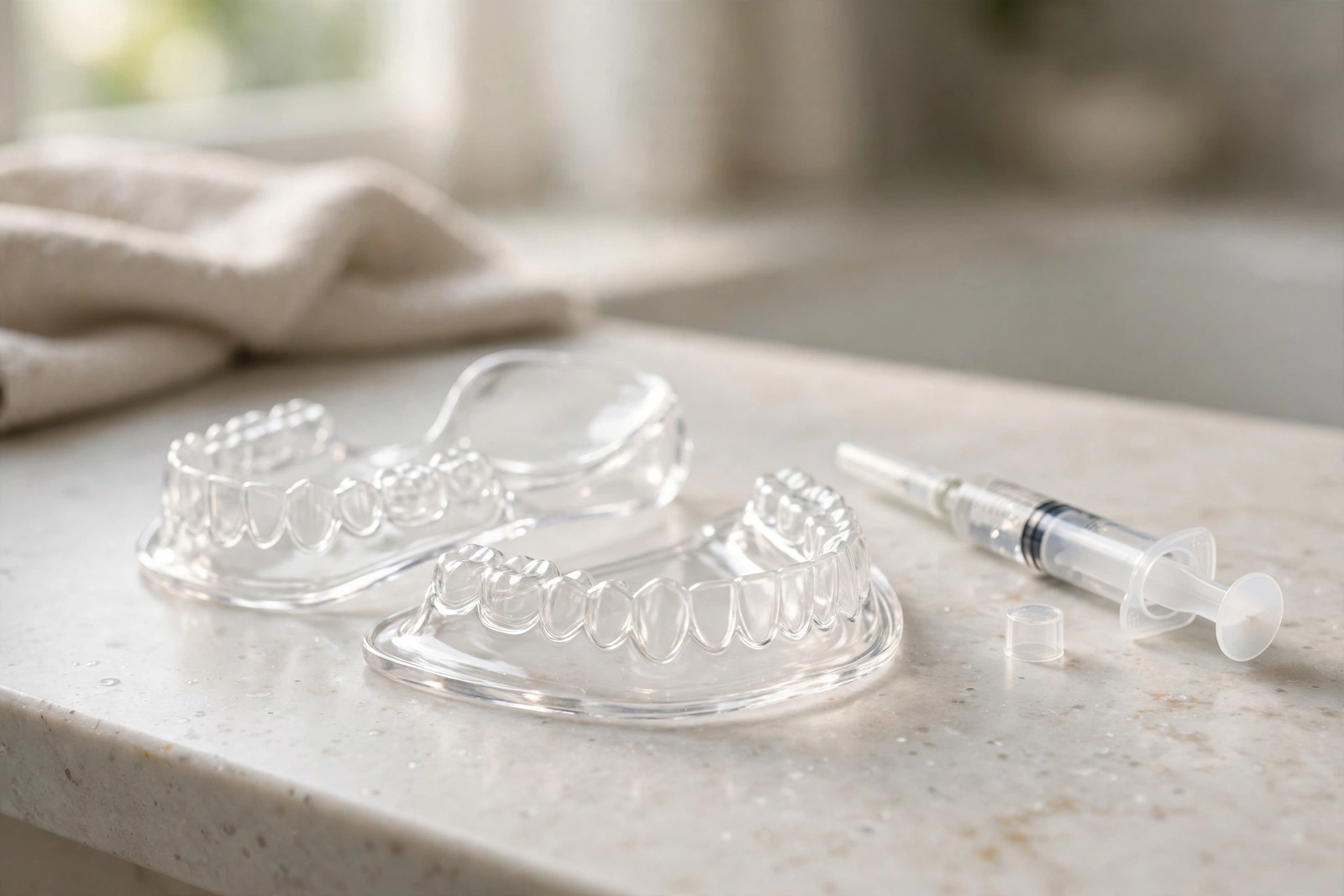
Dentist-supplied take-home kits are the middle ground. Your dentist takes impressions of your teeth and has custom trays made to fit, then gives you professional-strength whitening gel to wear at home, usually for 30 to 60 minutes a day over one to two weeks.
Typical Canadian prices run from $250 to $500, which covers the custom trays plus the first supply of gel. Because the trays are yours to keep, future touch-ups only need a new supply of gel, which usually costs much less than buying the whole kit again.
This option suits patients who want professional results without a long appointment, or who need to whiten gradually around existing dental work that a dentist should check first.
Over-the-Counter Whitening Products: $30 to $100
Over-the-counter whitening products are the cheapest way to brighten teeth. Whitening strips, paint-on gels and pens typically cost $30 to $100 for a course, while whitening toothpaste and rinses cost $5 to $25. They are sold at pharmacies and grocery stores across Canada.
The trade-off is strength. OTC products contain much lower concentrations of whitening agents than professional gels, so results are gradual and more modest, usually visible after two to three weeks of daily use. They work best on surface stains from coffee, tea or tobacco rather than deeper discolouration.
Used as directed, these products are generally safe, but overuse can irritate gums and increase sensitivity. A dental checkup before starting is still wise, especially if you have cavities, gum disease or worn enamel.

What Affects the Cost of Teeth Whitening?
Two patients asking for the same treatment can receive very different quotes. These are the main reasons why:
- Province and city. Clinics in major urban centres like Toronto and Vancouver often charge more than clinics in smaller cities, reflecting higher rent and staffing costs.
- The system used. Light-activated and laser systems carry higher equipment and training costs, which show up in the price.
- Number of sessions. Heavily stained teeth sometimes need a second visit, which adds to the total.
- Your starting point. Stains from medication, fluorosis or aging can need longer treatment than surface stains.
- What is bundled in. A quote that includes an exam, a cleaning and desensitising treatment is not directly comparable to a whitening-only price.
- Related treatments. Some patients compare whitening against bigger cosmetic changes. Our guides to braces cost in Canada, Invisalign cost in Canada and dental implant cost put those alternatives in context.
Is Teeth Whitening Covered by Insurance or the CDCP?
Teeth whitening is classed as a cosmetic treatment, which means it is almost never covered. Most private dental insurance plans in Canada exclude cosmetic work entirely, and employer benefit plans treat whitening the same way. A rare exception is discolouration caused by a medical condition or treatment, but even then coverage is unusual and needs a written predetermination from the insurer.
The Canadian Dental Care Plan does not cover whitening either. The CDCP pays for essential dental care for eligible Canadians, and cosmetic procedures such as whitening, veneers and implants are excluded from the plan. If you rely on the CDCP, budget for whitening as a fully out-of-pocket cost.
Because whitening is cosmetic, it also does not qualify as an eligible medical expense for the federal medical expense tax credit. For the full picture of how plans treat elective work, see our guide to dental insurance in Canada.
How to Save on Teeth Whitening in Canada
Whitening is an out-of-pocket cost for most Canadians, so it pays to shop smart:
- Compare written quotes. Ask two or three clinics for the total price including exam, cleaning and any follow-up visit, so you compare like with like.
- Start with a cleaning. A professional polish removes surface stains first, and some patients find their teeth look bright enough without bleaching.
- Ask about touch-up pricing. Clinics often discount follow-up sessions and refill gel for take-home trays.
- Check dental schools. University dental schools offer supervised treatment at reduced rates if you can accept longer appointments.
- Watch for seasonal specials. Many clinics run whitening promotions in spring and before wedding season.
Questions to Ask Before You Book
A short consultation protects you from surprises. Ask these questions before you book:
- What type of whitening do you recommend for my stains, and why?
- What is the total cost, including the exam, cleaning and any desensitising treatment?
- How many shades lighter can I realistically expect, and how long will it last?
- Do I have cavities, gum disease or restorations that whitening will not change?
- Are touch-up sessions or refill gel included or discounted?
- What should I do if I get sensitivity during or after treatment?
Frequently Asked Questions
How much does teeth whitening cost in Canada?
Most Canadians pay $300 to $800 for an in-office session, $250 to $500 for dentist-supplied take-home trays, and $30 to $100 for over-the-counter strips or gels. Premium laser whitening can reach $800 to $1,500. Prices are typical market ranges and vary by province, city and clinic.
How much is professional in-office whitening?
A standard in-office whitening session typically costs $300 to $800, with about $650 a common price at many clinics. The appointment usually lasts 60 to 90 minutes and includes a high-strength whitening gel applied under a dentist's supervision, sometimes activated by a light or laser.
Is laser teeth whitening worth the extra cost?
Laser whitening is the most expensive option at $800 to $1,500, but evidence that it whitens more than standard in-office gel is mixed. You are mainly paying for speed and the clinic's equipment. A conventional in-office session often gives comparable results for less.
Does dental insurance cover teeth whitening?
Almost never. Whitening is considered cosmetic, and most private and employer-sponsored plans in Canada exclude cosmetic dental work. Check your plan booklet or ask your insurer for a written predetermination before assuming anything.
Does the CDCP cover teeth whitening?
No. The Canadian Dental Care Plan covers essential dental care for eligible Canadians and excludes cosmetic procedures, including whitening, veneers and implants. Whitening is a fully out-of-pocket cost even for CDCP members.
How long do whitening results last?
Professional whitening results usually last from six months to two years. Coffee, tea, red wine and tobacco stain teeth again fastest. Touch-up treatments, either a clinic visit or refill gel for your trays, extend the results at a fraction of the first treatment's cost.
Does teeth whitening hurt or damage enamel?
Temporary tooth sensitivity and mild gum irritation are the most common side effects and usually fade within a day or two. When done by a dentist with the right gel concentration and gum protection, whitening does not damage enamel. Overusing store-bought products, however, can wear enamel and should be avoided.
Do whitening strips work as well as professional whitening?
Strips can lighten teeth a few shades, but they use weaker agents and take two to three weeks of daily use. Professional whitening is stronger, faster and supervised, which matters if you have cavities, gum disease or existing crowns and fillings that will not change colour.
Why does the price vary so much between clinics?
Location, overhead, the whitening system used, what is bundled into the quote (exam, cleaning, desensitiser) and the number of sessions needed all move the price. Always ask for the total all-in cost in writing before comparing quotes.
Can I claim teeth whitening on my taxes?
No. The Canada Revenue Agency lists teeth whitening as a non-eligible cosmetic expense for the medical expense tax credit. Whitening is paid with after-tax dollars.
Sources
- Teeth Whitening Cost, Benefits and Financing, Beautifi
- How Much Does Teeth Whitening Cost in Canada?, MEK Dental
- How Much Does a Dentist Visit Cost in Canada? (2026 Price Guide), Smile Directory
- Teeth Whitening Cost in Canada, HelloDent
- Canadian Dental Care Plan, Government of Canada
- Medical Expenses (RC4065), Canada Revenue Agency
Related Guides
- Dental Costs in Canada
- Dental Insurance in Canada
- Invisalign Cost in Canada
- Dental Implant Cost in Canada
- Braces Cost in Canada
- Canadian Dental Care Plan (CDCP)